Aboyanga’s Bribe Bombshell : “Col. Talleh Took Bribe From Me” -National Security Capo Accused But Strongly Denies In Illegal Mining Saga

The battle over the Apinto mine in the Prestea Huni-Valley Municipality has exploded into a storm of political muscle, with military involvement, and corruption allegations dragging the National Security apparatus into the mud.
At the centre of the scandal is Ebenezer Amemagakpor, alias Commander or Aboyanga, a self-styled NDC power broker. Once a grassroots mobiliser for the party, he has now turned his fury on National Security, accusing Colonel Talleh, one of its senior officers, of pocketing bribes to influence the violent takeover of the mine.
Col. Talleh has flatly denied the allegations, dismissing them as unfounded. But Aboyanga insists he has been betrayed by the very machinery he claims he helped bring to power.
How It Began: A Raid Based on “False Intelligence”
On 11 March 2025, National Security operatives, backed by troops from the 2nd Battalion (2BN) of the Ghana Armed Forces, stormed the licensed concession of RMG Mining Ltd. Workers and managers were driven off, and soldiers remained stationed on the property.
Days later, soldiers escorted Chinese nationals and a local figure known as Nana Kakra onto the site. RMG’s executives were barred entry while the new arrivals operated freely under armed protection.
When RMG sought redress, the Tarkwa High Court issued an injunction restraining all parties. The order was openly defied by the Member of Parliament (MP), the Municipal Chief Executive (MCE), and the Chinese operators, who continued mining with RMG’s equipment.
Commander’s Explosive Rant
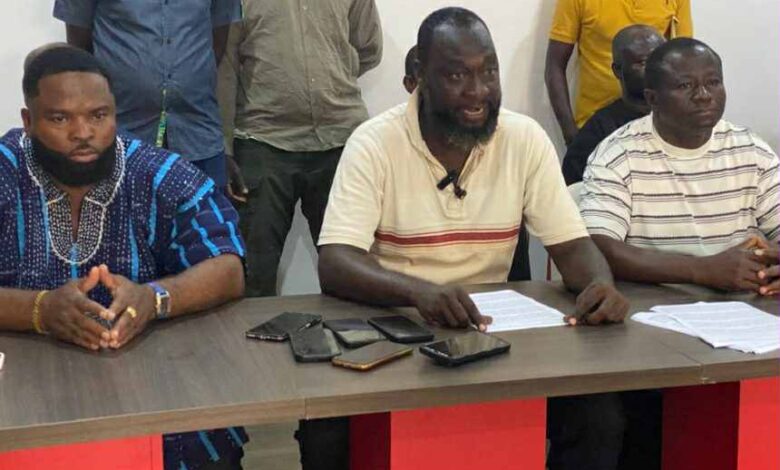
In a fiery radio outburst, Aboyanga, the man leading the takeover, lashed out at National Security:
“Col. Talleh should know some of us suffered before the party came to power. You weren’t there. You can’t be sent to shoot party boys just like that. This has happened four times. If he tries a fifth time, I will go to Accra and sue him — because he took money from me. I don’t want to go deep.”
He warned that National Security would “never know peace” if they continued interfering in what he described as the spoils of political victory.
Broken Promises and Escalating Clashes
- 26 March 2025 — At a meeting in Accra, National Security admitted it had acted on false information. It was agreed that RMG should retake control of its concession. The local MP was tasked with ensuring compliance.
- 27 March 2025 — Instead of enforcing the deal, the MP reneged. He seized the mine and handed it to his NDC allies. RMG engineers who attempted to re-enter were arrested by soldiers and thugs.
- 1 May 2025 — Lt. Col. Zacharia led another attempt to restore RMG. Armed NDC youth, thugs, and 2BN soldiers repelled them.
- 21 June 2025 A 20-man National Security detachment under WO1 Richard Yelang was deployed. They too were blocked after a week-long standoff.
- 30 July 2025 — The IGP’s task force stormed the site and arrested five Chinese nationals. Mysteriously, they were released days later and returned to the mine. Operations continued.
Deafening Silence from Authorities
RMG has filed petitions wit, the Minister for Lands & Natural Resources, CEO of the Minerals Commission, Environmental Protection Agency (EPA), Inspector General of Police (IGP), National Security Coordinator, Electricity Company of Ghana (ECG), and Small-Scale Miners Association.
Except for the IGP’s fleeting intervention, none of these institutions has taken decisive action.
Even appeals from the Majority Leader in Parliament who personally intervened with the lands minister, have been ignored by the MP, who continues to bar RMG from its concession.
The Shadow Power Brokers
Behind Commander Aboyanga’s bravado, three names keep surfacing: Enoch, Justice, and Ben.
These men, said to draw their influence “from the very top of the NDC hierarchy,” reportedly boast openly that their power flows from the powerful inner circle. Investigators suspect they are among the true beneficiaries of the mine’s unlawful seizure.
What’s at Stake?
The Apinto mine saga has spiralled into more than a local land dispute. It is now a litmus test for the rule of law, the independence of state institutions, and the credibility of Ghana’s fight against illegal mining.
With soldiers guarding illegal miners, court orders ignored, and senior security officials accused of bribery, the question remains: Who really controls Ghana’s gold — the law, or the party boys with guns?