Supreme Court Admits 14 Civil Society Organisations in Landmark Case Challenging Legality of Office of the Special Prosecutor

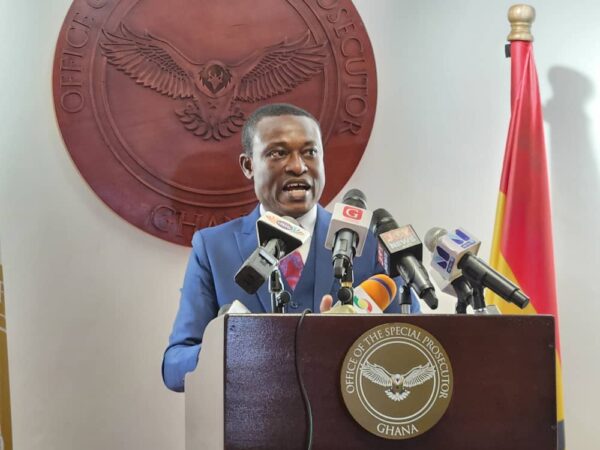
The Supreme Court has recently granted a motion to join a constitutional challenge against Ghana’s anti-corruption authority, the Office of the Special Prosecutor (OSP) by 14 civil society organisations (CSOs). A seven-member panel, presided over by Chief Justice Paul Baffoe-Bonnie, admitted the CSOs after their lawyers said the organizations’ expertise in governance and anti-corruption matters would help the court in resolving the important matter. Lawyers for the applicants, Kizito Beyuo, advised them that the CSOs have significant institutional knowledge and experience in accountability, governance, and anti-corruption advocacy, making them essential for a matter involving a broad scope across the country.
Other influential bodies include the Ghana Centre for Democratic Development, Transparency International Ghana, IMANI Africa, Ghana Anti-Corruption Coalition, and similar, prominent policy advocacy and governance reforms organization actors. Its central case was Adamtey v Attorney-General, a private citizen’s motion that the Office of the Special Prosecutor was unconstitutional. The plaintiff has asserted that, for its part, certain components of the agency’s formation and functions do not comply with Ghana’s 1992 Constitution.
Its inception was an independent agency established under the Office of the Special Prosecutor Act, 2017 (Act 959), with a mandate of investigating and prosecuting corruption cases particularly those which involve public figures or individuals or organizations having political exposure. It has handled several outstanding cases since its creation. As a landmark component of Ghana’s anti-corruption system, this body continues to be one of its cornerstones. This is a move not only for the 14 officers but also raises larger public interest and other policy questions that are sure to follow the decisions made by the Supreme Court. A lot of attention remains for the case as it may influence the accountability process and institutional independence on Ghanaian society.
Editor:
Obiri-Yeboah