Minerals Commission office built by Akufo-Addo in Kumasi finally opens after Ashanti NPP criticism

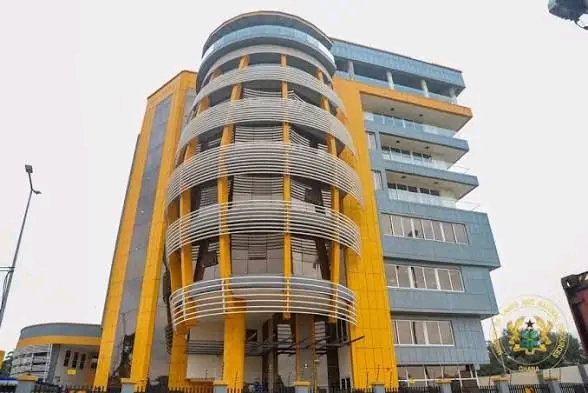
The John Mahama administration has finally commissioned an ultra-modern office complex for the Minerals Commission in Kumasi, following months of a strong campaign by the NPP communication team in the Ashanti Region for improved public infrastructure and stronger support for key state institutions.
The facility, which was started under the Akufo-Addo administration, was commissioned through the Ministry of Lands and Natural Resources on Monday, August 24.
It is expected to strengthen the Commission’s operations, improve service delivery, and enhance the regulation of Ghana’s mining sector.
Speaking at the commissioning ceremony on behalf of the Minister for Lands and Natural Resources, Emmanuel Armah-Kofi Buah, Deputy Minister Yusif Sulemana described the facility as more than an office building.
He said it represents “a significant investment in the institutional infrastructure required to regulate, manage and develop Ghana’s mineral resources effectively.”
The Deputy Minister noted that the Minerals Commission plays a critical role in Ghana’s mining sector, with responsibilities including the regulation and management of the country’s mineral resources, administration of mineral rights, monitoring of mining operations, collection of data, policy advice, and enforcement of government policies.
He said providing the Commission with a modern facility would enhance its operational efficiency and create a better working environment for its personnel while improving the quality of services delivered to investors, mining companies, communities, and other stakeholders.
He stressed that the government views infrastructure “not merely as a support system for mining, but as a catalyst for broader economic and social development.”
Mr Sulemana noted that Ghana possesses significant mineral resources, including gold, bauxite, manganese, diamonds, and an expanding range of industrial and technology minerals.
“We must move beyond an economy where minerals are simply extracted and exported, towards one where mining stimulates infrastructure development, industrialisation, local enterprise, job creation and value addition,” he said.
He added that a modern mining industry requires strong regulatory institutions, reliable data systems, modern laboratories, effective inspection facilities, and digital platforms that reduce delays and improve transparency.
He therefore urged the Minerals Commission to continue operating with “the professionalism, efficiency and technological capacity required to support a modern and competitive mining economy.”
Speaking on behalf of the Asantehene, Otumfuo Osei Tutu II, Baffour Owusu Amankwatia VI extended warm greetings and best wishes to the management and staff of the Minerals Commission.
He described the facility as “a significant addition to the Garden City’s skyline and a proud reflection of Ashanti’s rich mineral heritage.”
According to him, the new facility goes beyond being an architectural achievement, describing it as “a symbol of the growing importance of effective mineral governance to Ghana’s development.”
He noted that the Kumasi office of the Minerals Commission was established to bring sustainable mineral management, policy enforcement, and licensing closer to mining operations and stakeholders in the middle belt of the country.
The Chief Executive Officer of the Minerals Commission, Isaac Tandoh, described the commissioning as “a major milestone in the Commission’s efforts to strengthen mineral governance and bring its services closer to the people.”
He said the facility reflects the Commission’s commitment to decentralising its operations and improving service delivery across the country.
Mr Tandoh said the investment forms part of broader efforts to modernise the Commission, enhance regulatory effectiveness, and ensure that Ghana’s mineral resources are managed responsibly and sustainably.
He added that the new facility would help improve “accessibility, efficiency and transparency” in the delivery of the Commission’s mandate.