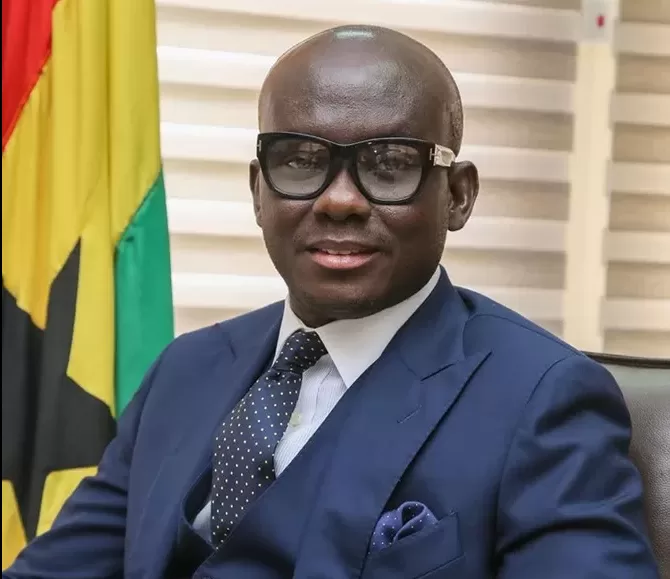
Holding Government to Account Press Conference; NPP Mighty Minority Reflects on One Year of Government Scrutiny.

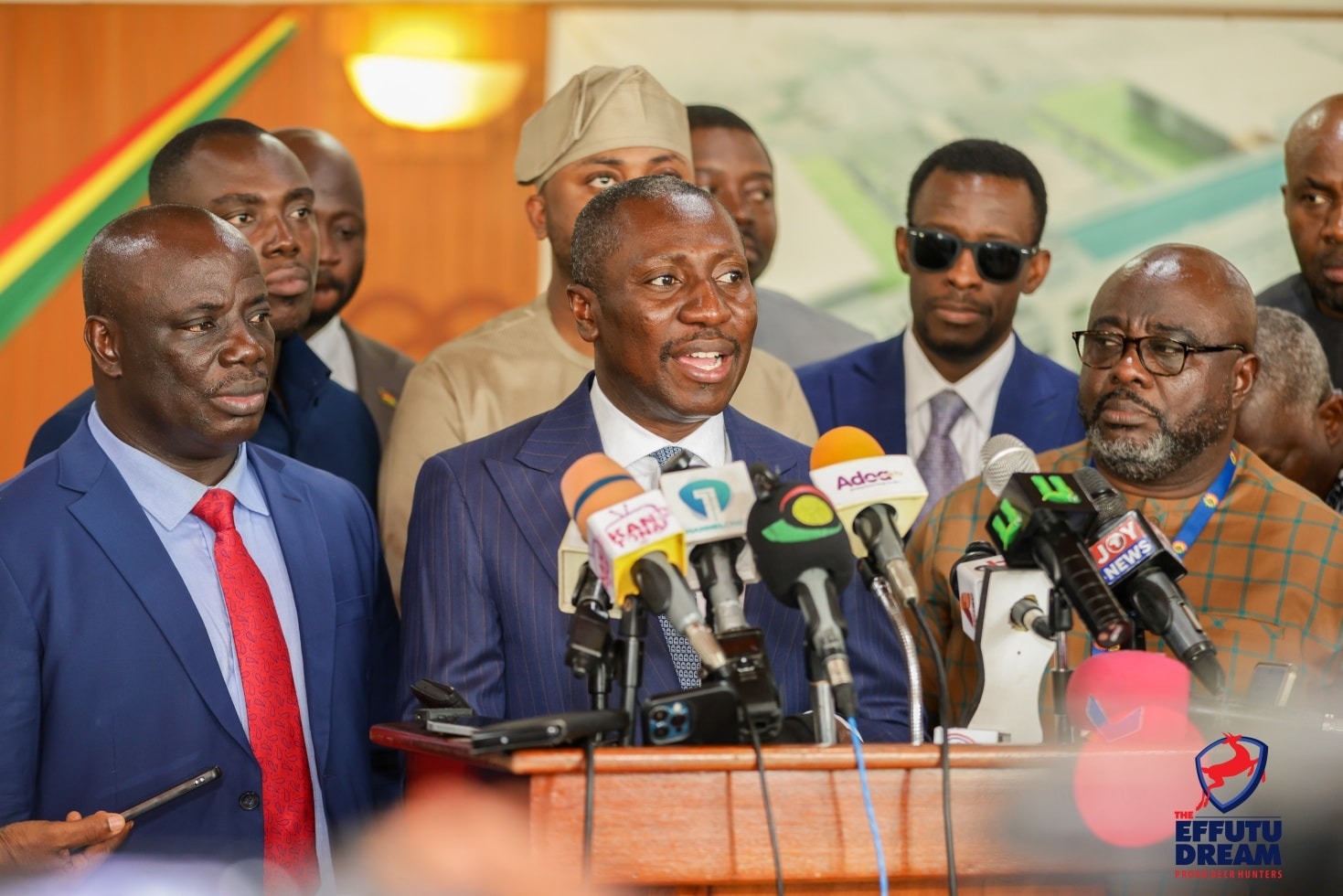 In a comprehensive press briefing held at Parliament House in Accra on Monday, the Minority Caucus of Ghana’s Ninth Parliament officially launched its legislative agenda for the year under the theme “Holding Government to Account: A Year of Active and Responsible Minority Scrutiny.”
Presiding over the event, Hon. Osahen Alexander Kwamina Afenyo-Markin, Minority Leader and Member of Parliament for Effutu, delivered opening remarks stressing that the Minority’s role is rooted in constitutional duty ensuring accountability, transparency, and robust debate in Parliament. He emphasised that Ghana’s democratic governance hinges on effective legislative oversight and the protection of parliamentary procedures that safeguard public interest. He also commended the journalist and the media for their continuous amplifying the voice of the minority.
In his opening address, Hon. Afenyo-Markin said the press conference was convened not for partisan attacks, but to articulate the Minority’s commitment to scrutinising government actions and defending procedural integrity in Parliament. He stressed that this duty was central to upholding democracy and representing the voices of all Ghanaians.
The Minority Leader reminded citizens that Parliament’s primary role is deliberation and examination of policy not merely the rapid passage of legislation without proper debate.
Here are some major highlights from the press conference
No More “Certificates of Urgency” Without Scrutiny
One of the central declarations of the briefing was the Minority’s commitment to resist attempts to rush government bills through Parliament using certificates of urgency.
Hon. Afenyo-Markin underscored that in 2025, several laws were passed under such certificates with limited opportunity for debate. A trend the Caucus described as eroding legislative oversight. He vowed that when Parliament reconvenes on February 3, 2026, the Minority would vigilantly oppose any efforts to bypass rigorous scrutiny, calling irregular use of urgency certificates a threat to democratic procedure and accountability.
Procedural Roadblocks and Parliamentary Equity
The Minority also highlighted concerns about procedural barriers they say have hindered their ability to raise national issues in Parliament. Hon. Afenyo-Markin accused the Office of the Speaker of creating technical roadblocks that delay or dismiss motions and questions from Minority MPs, a trend he described as a “subtle culture of silence.”
He urged the Speaker to prioritise substance over form, insisting that parliamentary business should be debated on its merits and not blocked on technical grounds. The Minority called for fairness in procedural rulings to ensure both sides of the House operate on an equitable playing field.
Anti-LGBTQ+ Legislation: From Promise to Silence
Addressing a key national issue, the Minority accused the government of abandoning its earlier commitment to anti-LGBTQ+ legislation, a promise that featured prominently during the 2024 election campaign.
Hon. Afenyo-Markin said the ruling party, while in opposition, vigorously campaigned for the passage of the Human Sexual Rights and Family Values Bill to protect Ghana’s cultural and religious values. The Minority argued that after winning power, the government has gone silent on the matter, even as controversial content allegedly promoting sexual rights appeared in senior high school curricula which the government described as an error.
Galamsey and the Ghana Gold Board (GoldBod)
The press briefing also addressed concerns over illegal mining, popularly known as galamsey. The Minority accused the government of indirectly encouraging such activities through the structure and operations of the Ghana Gold Board (GoldBod). Although the Minority did not oppose the Gold-for-Reserves policy in principle, Hon. Afenyo-Markin questioned whether GoldBod distinguishes between legally mined gold and illicitly sourced gold suggesting that the current arrangement could worsen environmental degradation and failing to curb illegal mining.
Economic Management and Drivers of Growth
On the economy, the Minority challenged the government’s narrative of economic success, arguing that recent improvements were not the result of competent governance but rather driven by external factors. Hon. Afenyo-Markin cited the International Monetary Fund (IMF) programme, debt relief, rising commodity exports, and reduced government expenditure as the real catalysts for what some have described as economic stabilisation. A position he presented to counter claims of strong government economic management.
Cocoa Crisis: COCOBOD and Unpaid Farmers
The Minority expressed grave concern over the state of Ghana’s cocoa sector, particularly the failure to pay cocoa farmers on time. According to Hon. Afenyo-Markin, cocoa farmers across the country are suffering due to delays in payments, poor planning, and weak management at COCOBOD, despite cocoa being the backbone of Ghana’s economy.
He criticized the government’s handling of the sector and accused it of neglecting the welfare of farmers who sustain the country’s foreign exchange earnings. The Minority warned that continued neglect could threaten cocoa production and deepen rural poverty.
The Minority also took aim at the Minister for Food and Agriculture, Hon. Eric Opoku, accusing him of failing to demonstrate leadership and seriousness in addressing Ghana’s food security challenges. According to the Minority, the minister has offered rhetoric instead of solutions, while farmers continue to face rising input costs, limited access to credit, and inadequate support systems. He further on dared the sector minister to hold a press conference to tell Ghanaians the real policies to promote agriculture in Ghana
Foreign Affairs Concerns: US Visa Freeze and Diplomatic Missteps
A significant portion of the press briefing focused on Ghana’s foreign relations, particularly comments made by the Minister for Foreign Affairs which the Minority described as reckless and diplomatically damaging.
The Minority linked these comments to the reported U.S. visa restrictions on Ghanaian officials, warning that such developments harm Ghana’s international standing and could negatively affect ordinary citizens, students, and business travelers. They further criticized the Foreign Minister’s public posture on the Israel-Palestine conflict, stating that Ghana’s long-standing foreign policy of diplomacy and neutrality was being compromised through careless public commentary.
“Ghana’s foreign policy must be guided by diplomacy, restraint, and national interest not reckless commentary that risks international backlash,” the Minority stated.
Judicial Independence and Chief Justice Engagement
The Minority took a firm stance on matters concerning judicial independence. They criticised Chief Justice Paul Baffoe-Bonnie, alleging that his conduct regarding his approval process and institutional engagements reflected intolerance and a failure to respect dissenting views.
Hon. Afenyo-Markin announced that Minority MPs would boycott the Chief Justice’s planned visit to Parliament, expressing the view that his engagements appeared more like a “thank you tour” for his appointment rather than formal institutional consultation. The Minority called for any future engagement to occur through formal dialogue channels rather than public events.
In the closing remarks, the Minority reaffirmed its pledge to exercise its constitutional mandate with rigorous scrutinizing government actions, resisting procedural shortcuts, and ensuring that Parliament serves the people’s interests rather than partisan expediency.
Editor:
Obiri-Yeboah