The Minority in Parliament has expressed strong concerns over the Bank of Ghana’s decision to suspend the proposed 0.75% charge on direct wallet-to-bank transfers, questioning the central bank’s explanation that the suspension is for “further consultation.”
The levy, which was scheduled to take effect from June 1, was met with widespread public criticism, prompting the Bank of Ghana to suspend its implementation.
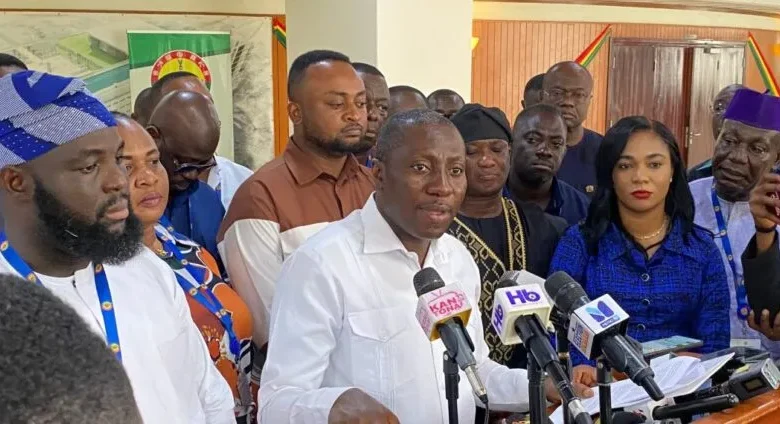
Addressing a press conference on Tuesday, May 26, Minority Leader Alexander Afenyo-Markin challenged the rationale behind both the initial announcement and the subsequent suspension of the charge.
He argued that the justification of “further consultation” contradicts earlier government assurances that major policy decisions would be preceded by proper stakeholder engagement and due process.
“They [BoG] are now purporting to say that they have suspended the levy. Meanwhile, they earlier put out a public notice that from the 1st of June, transactions from bank accounts to the wallet would attract a 0.75% fee on direct wallet-to-bank transfers. According to them, they are doing this suspension for further consultation. The question is, for what further consultation in this context?” he asked.
Mr Afenyo-Markin questioned why the same government that campaigned on the need for constructive consultation before implementing policies appears to have changed its approach.
He maintained that such fiscal measures should be subjected to full parliamentary scrutiny instead of being announced and later suspended following public backlash.
The Minority Leader also questioned the procedure used to introduce the levy and insisted that Parliament must be fully involved in decisions that directly affect financial transactions and citizens’ incomes.
He called on the Finance Minister to appear before Parliament to provide detailed explanations on how the proposed charge was developed, communicated, and eventually suspended.
“We are not interested in the suspension. We want to know how this was introduced and why Parliament was not fully engaged,” he emphasised.
Editor:
Obiri-Yeboah