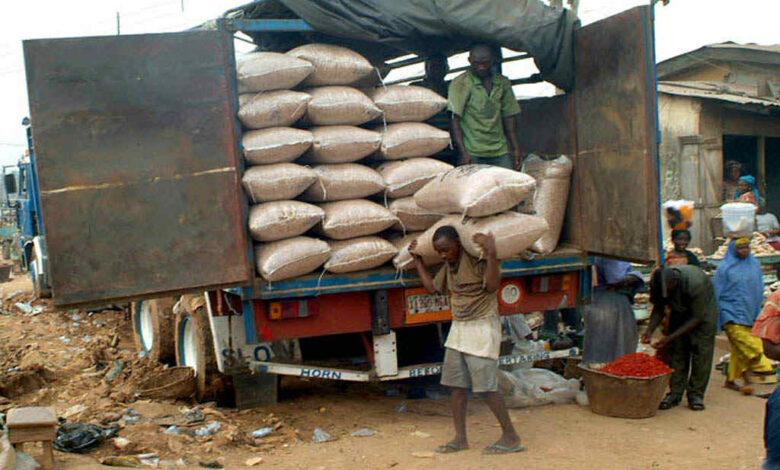
The streets of Ashaiman came alive one humid evening when a Special Unit of the Ghana Police Service (SSU) stormed a warehouse where thousands of stolen bags of maize were being kept. The arrest was led by Chief Inspector Sika and Chief Inspector Umar, with ASP Samuel Adu at one stage calling in to give critical instructions.
As the officers moved in, the standoff grew tense. Indian nationals accused of masterminding the operation clashed verbally with warehouse workers, while bewildered residents gathered in large numbers to witness the unfolding drama. For the onlookers, it was a rare confrontation between law enforcement and a powerful cartel that had long operated in the shadows.
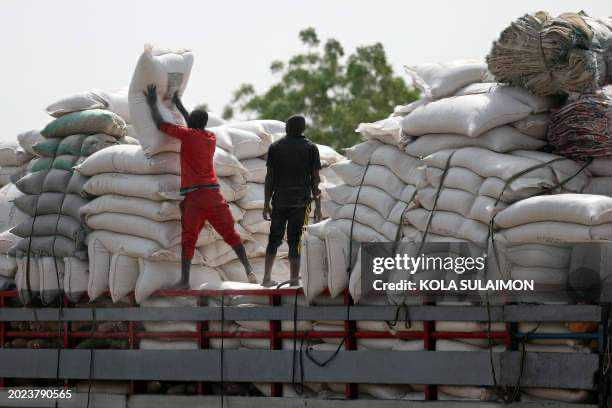
Yet far from the bustling streets of Ashaiman lies the true heart of the story — in the scorching fields of Ghana’s Afram Plains, where women like Zainab Siedu bend their backs to till the soil. With bare hands and borrowed tools, she plants maize seeds in the hope of feeding her children and earning a little money at the market. For Zainab and countless others, maize is more than food — it is survival.
But her survival is under siege. A cartel based in Ashaiman, made up of foreign nationals — mainly Indians — working hand in hand with Ghanaian collaborators, has devised a scheme that siphons away the very grain she labors for. Farmers like Zainab sweat through planting and harvesting, only to be swindled by middlemen and criminal networks that corner the market and reap massive profits.
A Cartel’s Grip
The cartel’s method is as ruthless as it is cunning. Farmers desperate for buyers are offered quick cash deals far below market value. Once the maize is collected, it is smuggled out in bulk — sometimes using falsified waybills and sometimes with the quiet backing of “powerful figures.” Those who resist often face intimidation, debt entrapment, or threats to their livelihoods.
In this latest case, over 3,000 bags of maize were stolen from hardworking farmers and secretly transported into cartel-controlled warehouses. The maize, which sells at market for about GH₵350 per bag, is being dumped by the syndicate at GH₵150 per bag. This predatory pricing not only robs farmers of fair returns but also destabilizes the grain market, pushing down prices and crushing genuine traders.
Police Strike — and Stall
The SSU raid initially seemed like a breakthrough. Acting on intelligence, the team intercepted part of the loot: 800 bags of maize were retrieved, loaded onto two trucks, and re-parked at a secure location.
But that was only a fraction of the 3,000 bags. As at press time, police were locked in a struggle to retrieve the rest of the consignment from the Ashaiman warehouse, facing stiff resistance from the Indian ringleaders and their local collaborators.
Worse still, when a second police team attempted to seize the remaining bags, their operation was mysteriously blocked. According to insiders, the obstruction came not from petty criminals but from well-connected individuals with influence in high places.
Unequal Justice
The arrests that followed only deepened suspicions of bias. Several Ghanaian members of the cartel were rounded up and held in police cells. But their Indian counterparts — who had allegedly recruited them into the scam and in whose houses some of the stolen maize was recovered — walked free.
Shocked and angry, the arrested Ghanaians openly questioned the fairness of the operation. “How can we all commit this crime and only us, the Ghanaians, are here in cells when the Indians are part of the crime?” one of them lamented.
This selective justice, witnesses say, not only undermines the credibility of the investigation but also raises troubling questions about who is being protected and why.
Farmers Robbed, Nation Drained
The effects are devastating. Smallholder farmers like Zainab watch their dreams collapse as they remain trapped in cycles of poverty. Meanwhile, Ghana loses millions in food security, market stability, and tax revenues. The cartel thrives, while the nation bleeds.
“Every bag of maize stolen is a family going hungry,” said a local farmer leader in Afram Plains who asked not to be named for fear of reprisals. “We are left with nothing, while they grow richer.”
⸻
A Call for Justice
The “Grain Heist” is not just about stolen maize — it is about the capture of Ghana’s agricultural future by greed and impunity. If police operations can be halted by invisible hands, and if justice can be applied selectively, then accountability is not blind — it is bound and compromised.
For Zainab, the fight is deeply personal. “I till the land with my own sweat,” she says softly, her palms rough with blisters. “But at the end, someone else eats the fruit of my labor.”
Unless the cartel is dismantled and the system cleansed of interference, her story — and that of thousands of poor farmers — will remain